
Total knee replacement
If osteoarthritis affects several parts of the knee and pain interferes with a short walk or a night’s sleep, a total replacement may be an option.
The decision takes account of how symptoms affect your life, what your X-rays show and how much exercise, physiotherapy and pain relief have helped.
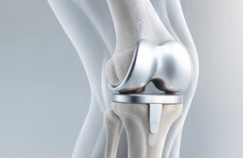
During surgery, the worn surfaces of the thigh bone and shin bone are resurfaced with prosthetic components. A polyethylene insert between them allows the joint to glide. The surgeon also assesses the surface of the kneecap. Planning takes account of knee shape, leg alignment and ligament stability.
Early recovery goals
The first goal is to stand and walk safely again.
Your physiotherapist then helps you gradually regain the ability to straighten and bend the knee, build thigh strength and manage stairs.
Swelling and stiffness may take time to settle even after you are walking again.
Materials and nickel allergy
The femoral component is often made of a cobalt–chromium alloy.
The tibial tray is generally made of a titanium alloy and supports the polyethylene insert.
Tell your surgeon about previous reactions to nickel so you can discuss whether an implant with alternative materials or a special coating is appropriate and check its exact composition.