
Painful joint replacements and revision surgery
If a hip or knee replacement remains painful or starts hurting again after a period of relief, the first step is to find out why.
Tell us when the pain started, where you feel it and whether it changes when walking, resting or taking your first steps after standing up.
Previous X-rays and your operation records help us understand what has changed.
Possible causes include tendon or muscle problems, instability, wear, loosening of the implant or infection.
Tests depend on the suspected cause and may include X-rays, blood tests and, when appropriate, a sample of joint fluid.
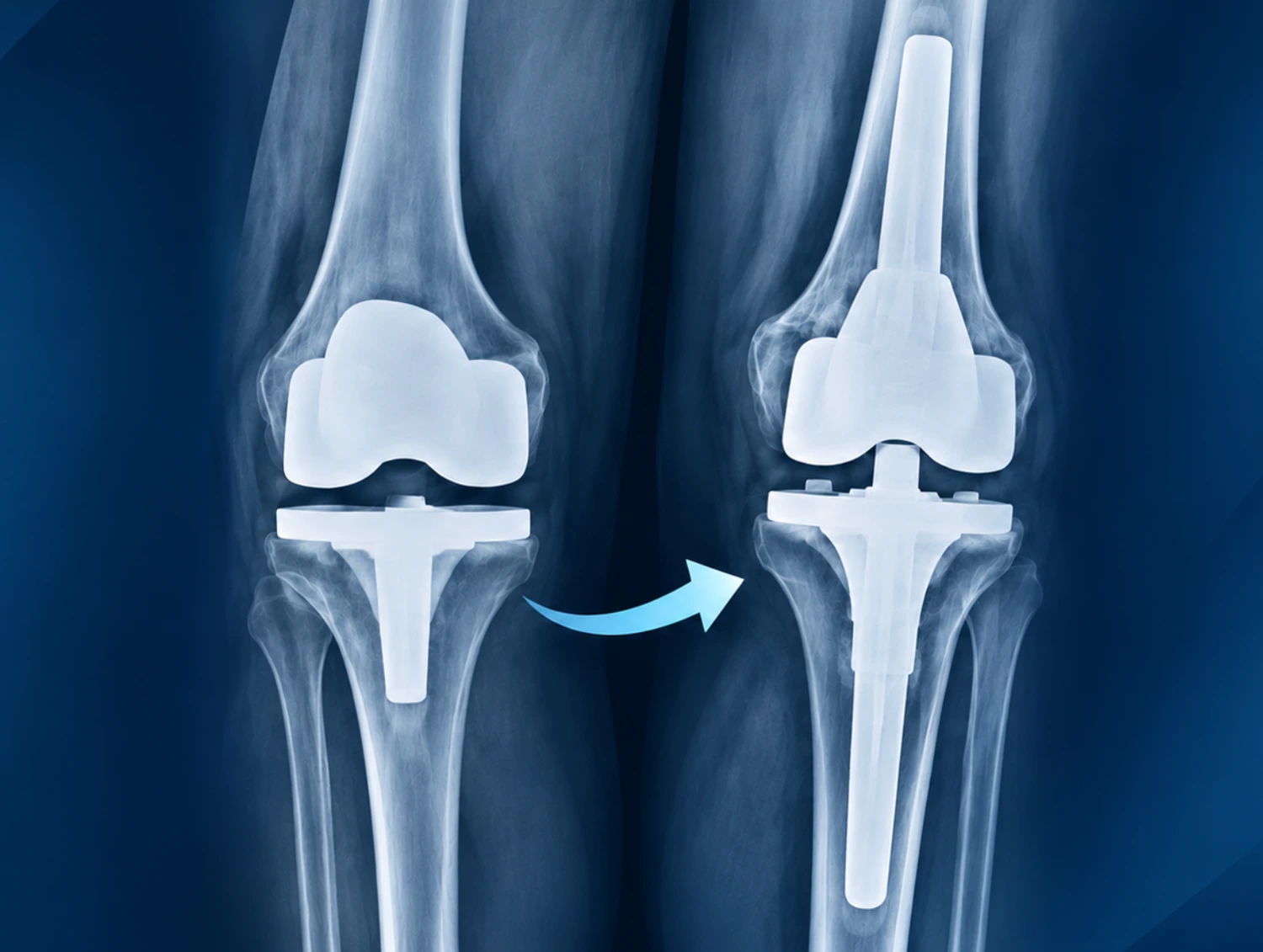
Revision surgery replaces one or more components and is considered when a problem has been identified that could benefit from another operation.
Which parts need replacing?
If only one component is affected and the others are securely fixed, well positioned and compatible, a partial revision may be possible.
If several parts are loose or poorly positioned, the whole implant may need replacing.
When supporting bone has been lost, stems or metal augments may help secure the new implant.
If infection is suspected
Identifying an infection changes the treatment plan.
The timing of symptoms, implant stability and sample results guide the choice between surgical cleaning with retention of the fixed components and replacement in one or two operations, alongside targeted antibiotics.
Planning your recovery
Before discharge, you will be told how much weight you can put on the leg, which walking aids to use and when to start your exercises.
Recovery may take longer than after the first replacement and depends on the reason for revision and the condition of the remaining bone and soft tissues.